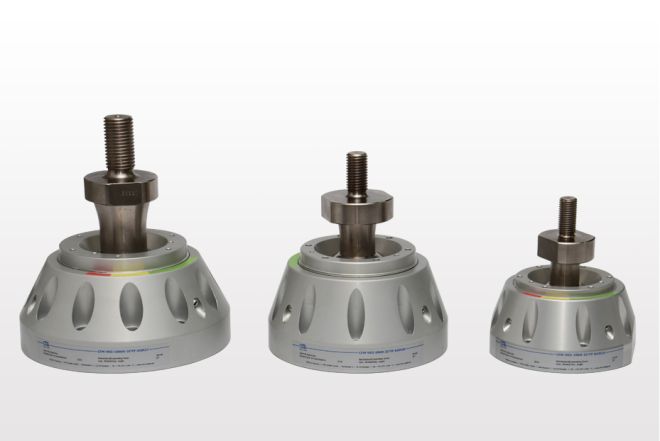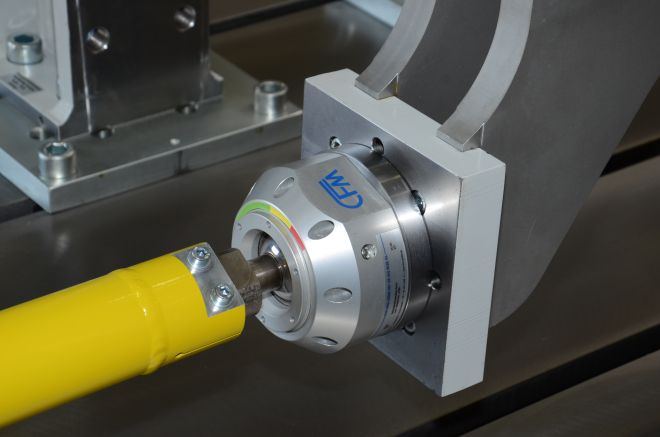
Fork, Cardan and Ball joints
Fork Joint
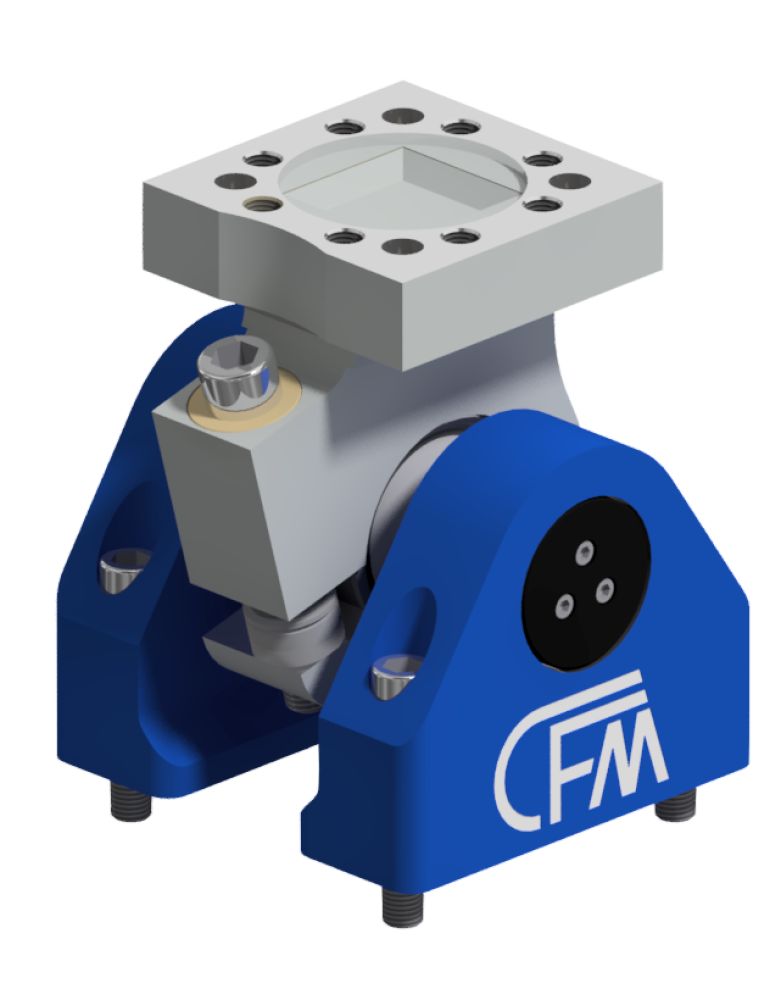
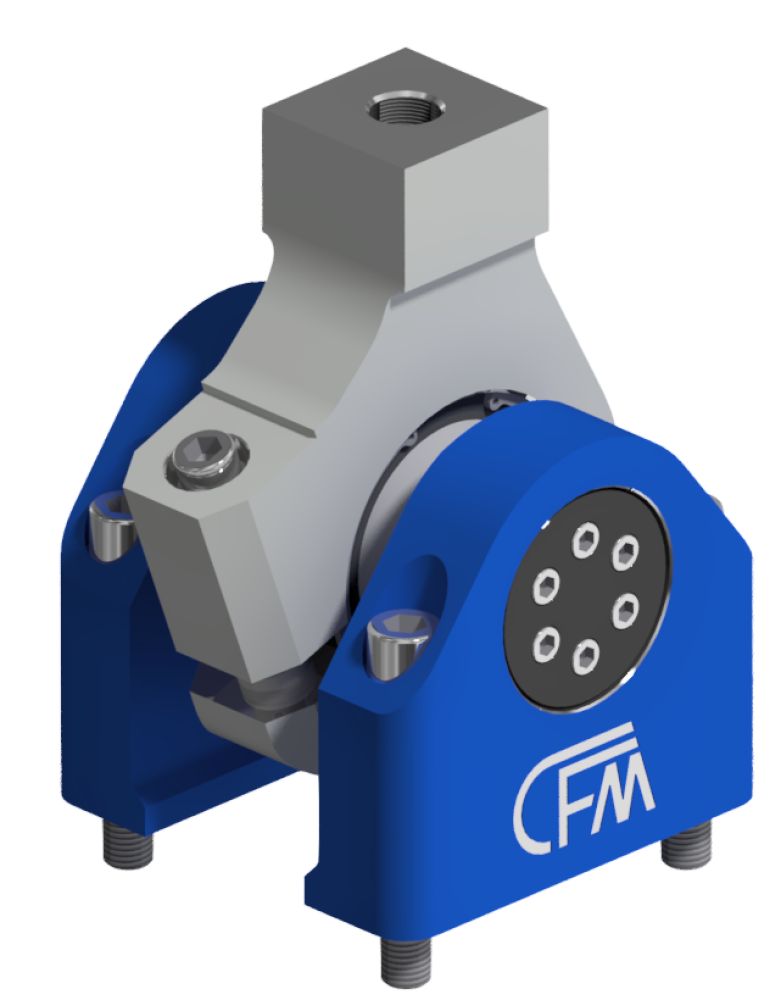
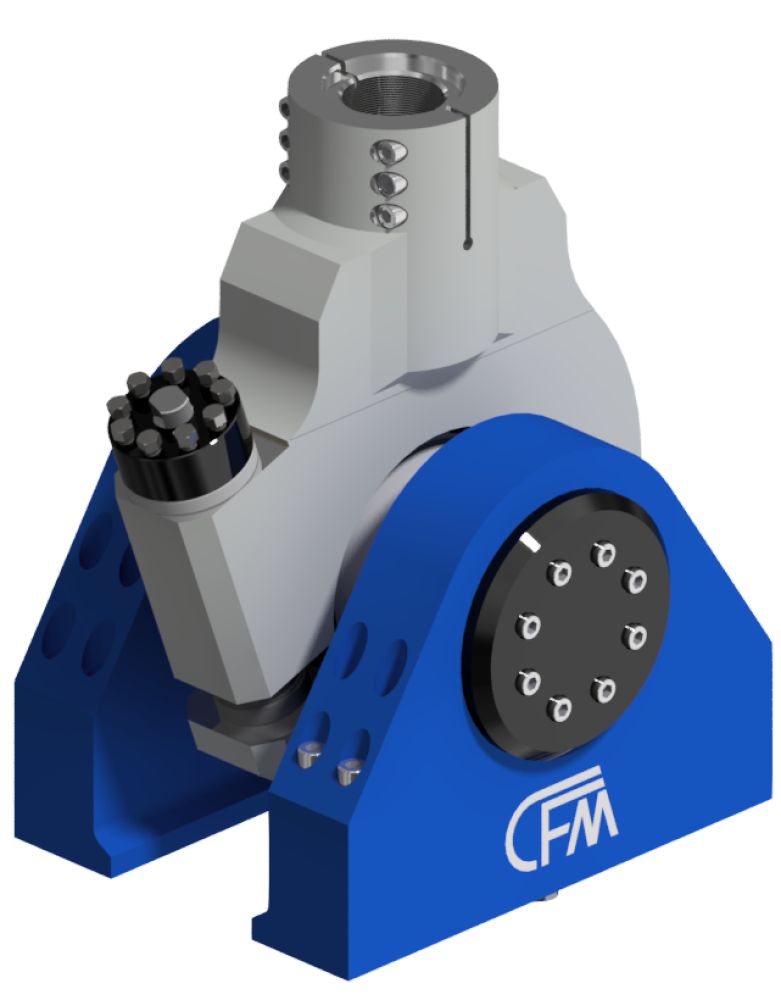
CFM SJ Series fork joints are designed to equip cylinders and connecting rods with single- or double-sided articulated bearings to allow force transmission at various angles.
CFM SJ Series fork joints are designed with very high axial stiffness to accommodate high operating frequencies and exhibit minimal deformation even under maximum loads. The spherical bearings used are sealed, maintenance-free, and non-metallic, resulting in low friction and minimal wear. Furthermore, the spherical bearings are interchangeable, and the bearing clearance is uniform and adjustable.
The CFM SJ Series fork joints are available in versions for base flange mounting to the cylinder as well as for mounting to piston rods, connecting rods, and load cells with a central thread.
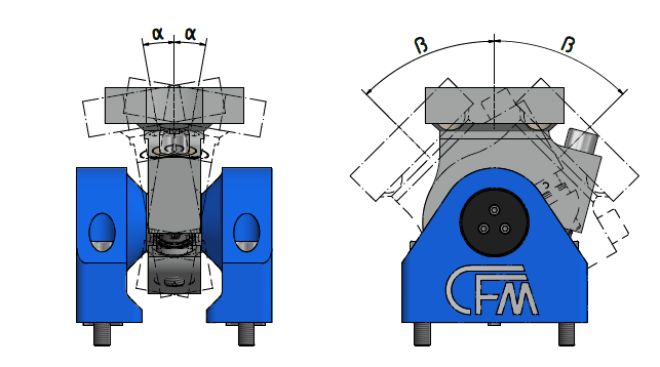
Examples of Different Types
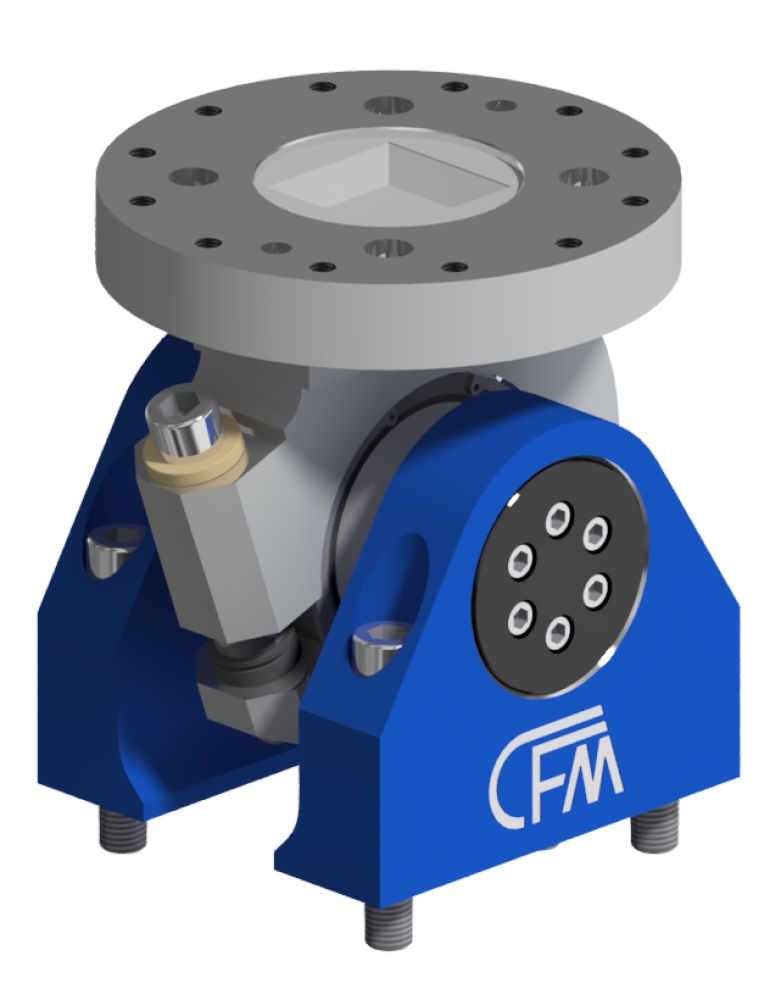
| Naming | Type | Force [kN] | Alpha Angle [α] | Beta Angle [β] | Weight [kg] | Ident-No. |
| CFM SJ 25 kN | RF | 25 | ± 10° | ± 45° | 4,5 | 253367 |
| CFM SJ 65 kN | RF | 65 | ± 10° | ± 45° | 16 | 253368 |
| CFM SJ 100 kN | SF | 100 | ± 10° | ± 45° | 34 | 253369 |
| CFM SJ 160 kN | SF | 160 | ± 10° | ± 45° | 34 | 253370 |
| CFM SJ 250 kN | RF | 250 | ± 10° | ± 45° | 94 | 253371 |
| CFM SJ 250 kN | RJ-CT | 250 | ± 10° | ± 45° | 75 | 262370 |
| CFM SJ 350 kN | RF | 350 | ± 10° | ± 45° | 94 | 261024 |
| CFM SJ 500 kN | RF | 500 | ± 10° | ± 45° | 183 | 253373 |
| CFM SJ 750 kN | RF | 750 | ± 10° | ± 45° | 264 | 253374 |
| CFM SJ 1000 kN | RF | 1000 | ± 10° | ± 45° | 318 | 253320 |
| CFM SJ 3000 kN | RF | 3000 | ± 10° | ± 45° | 3226 | 261141 |
| CFM SJ 3000 kN | RJ-CT | 3000 | ± 10° | ± 45° | 2270 | 261168 |
Cardan Joint
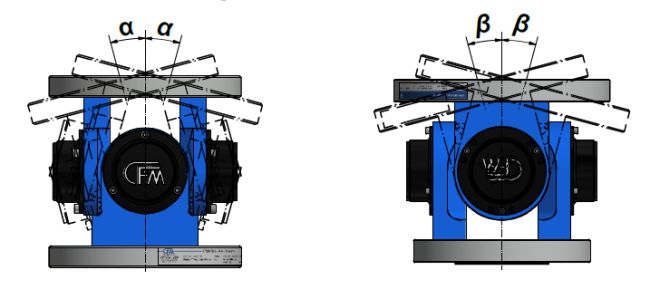
CFM cardan joints are used when swivel angles of up to +/- 15° are required in both axes. They are designed to be very rigid and are suitable for both static and dynamic applications.
The CFM cardan joints are specifi cally designed for high forces starting at 100 kN and are manufactured to handle up to 3,000 kN. The bearings in the universal joint are plain bearings and can be adjusted to eliminate play. Should wear occur, the bearings can be replaced by CFM.
CFM cardan joints are available in versions with round flanges and rectangular flanges.
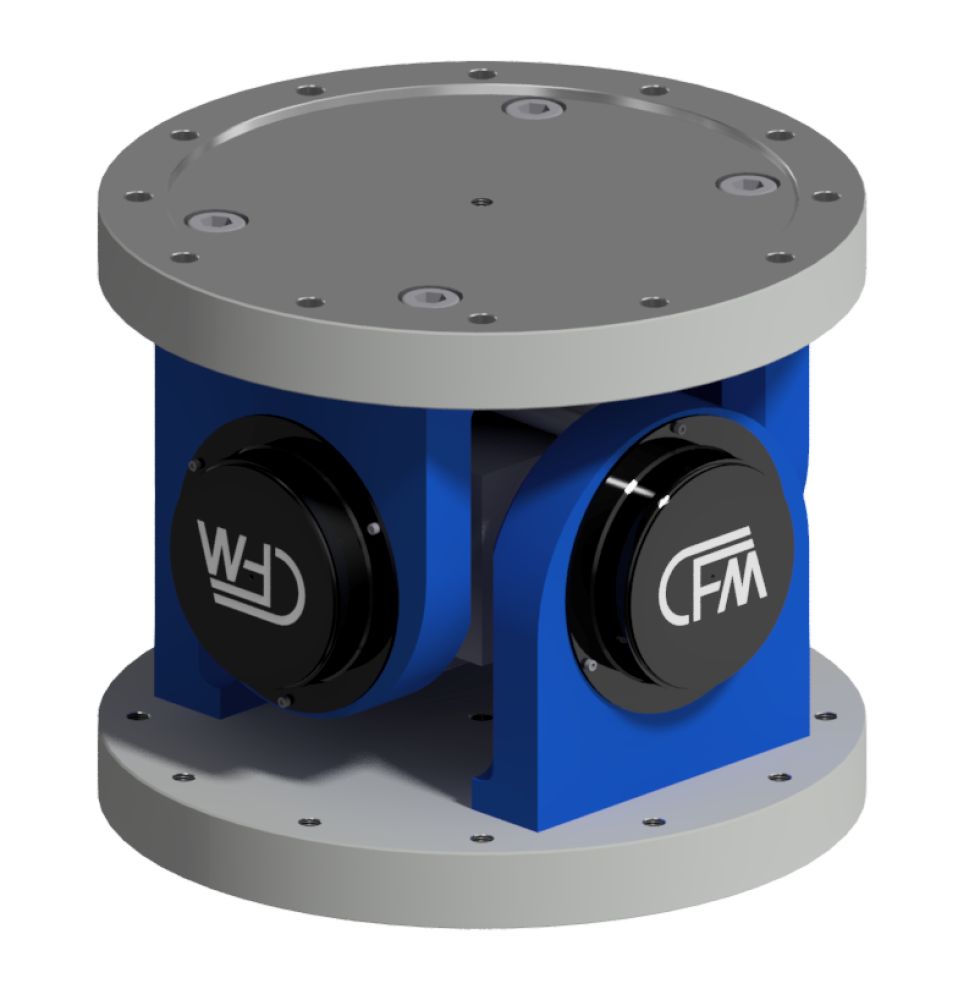
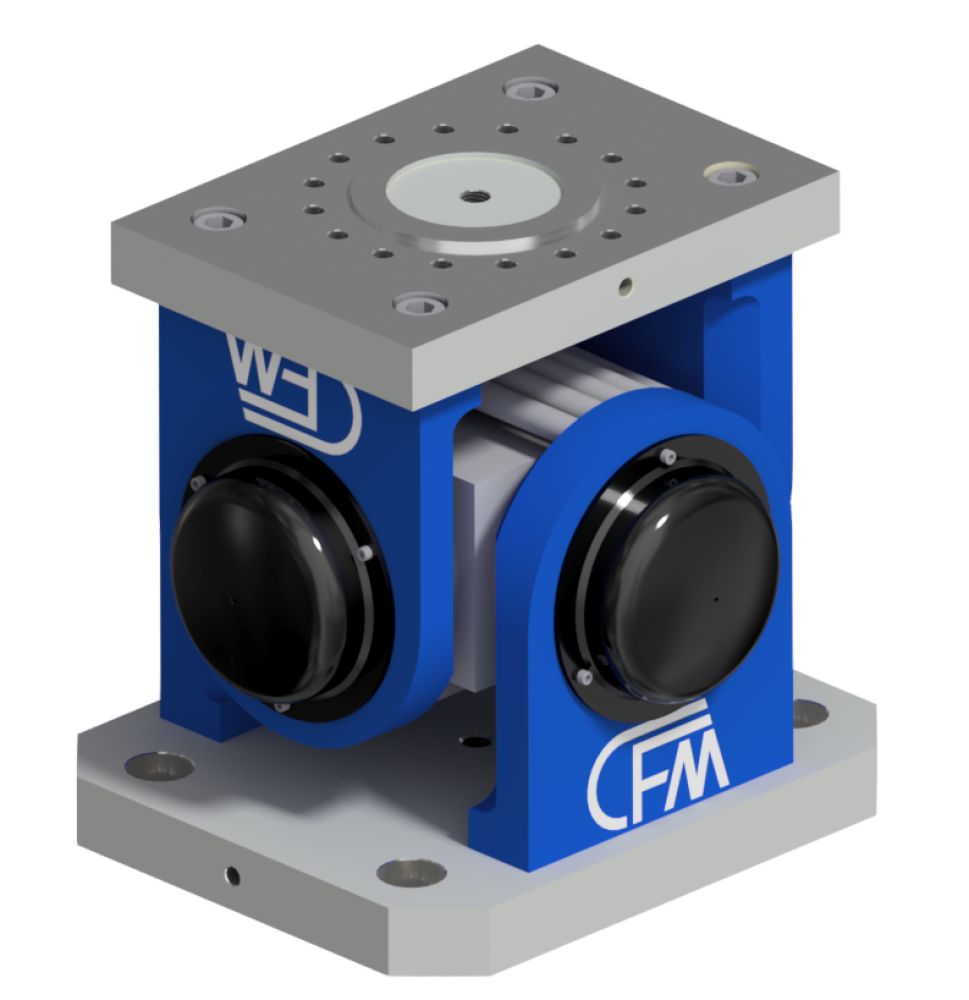
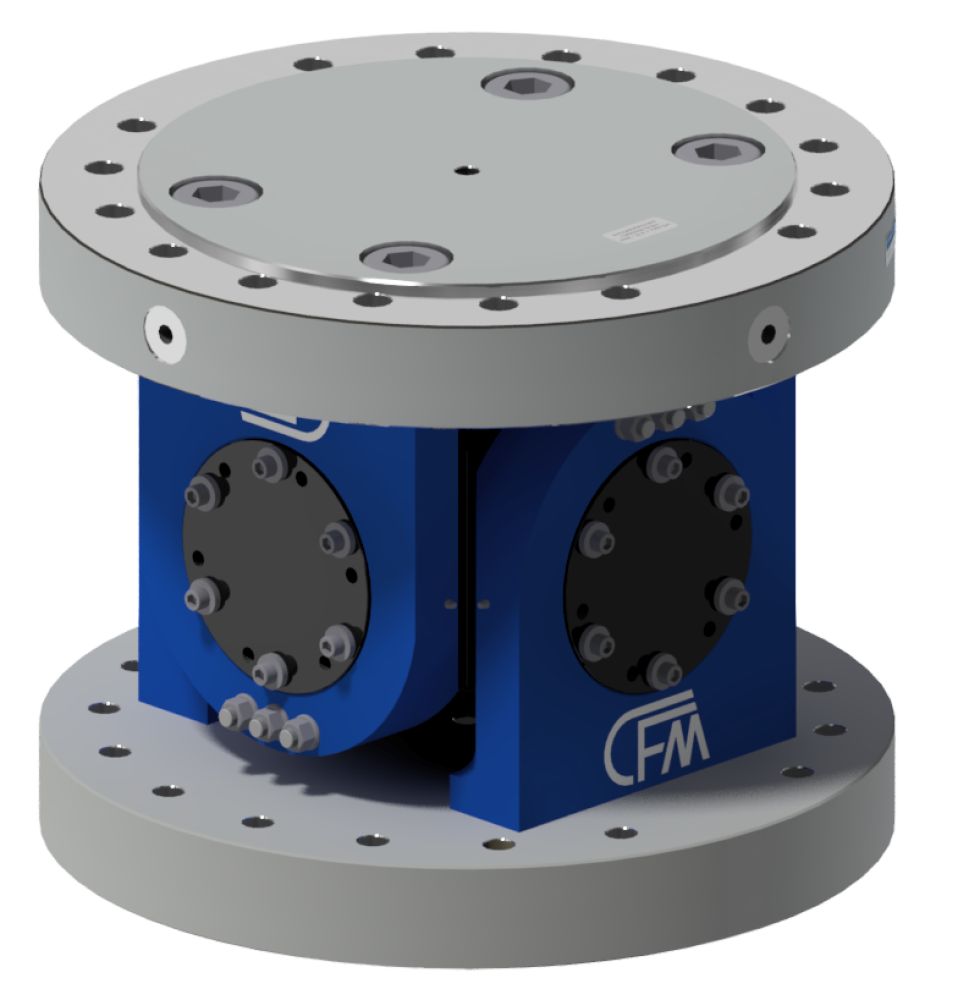
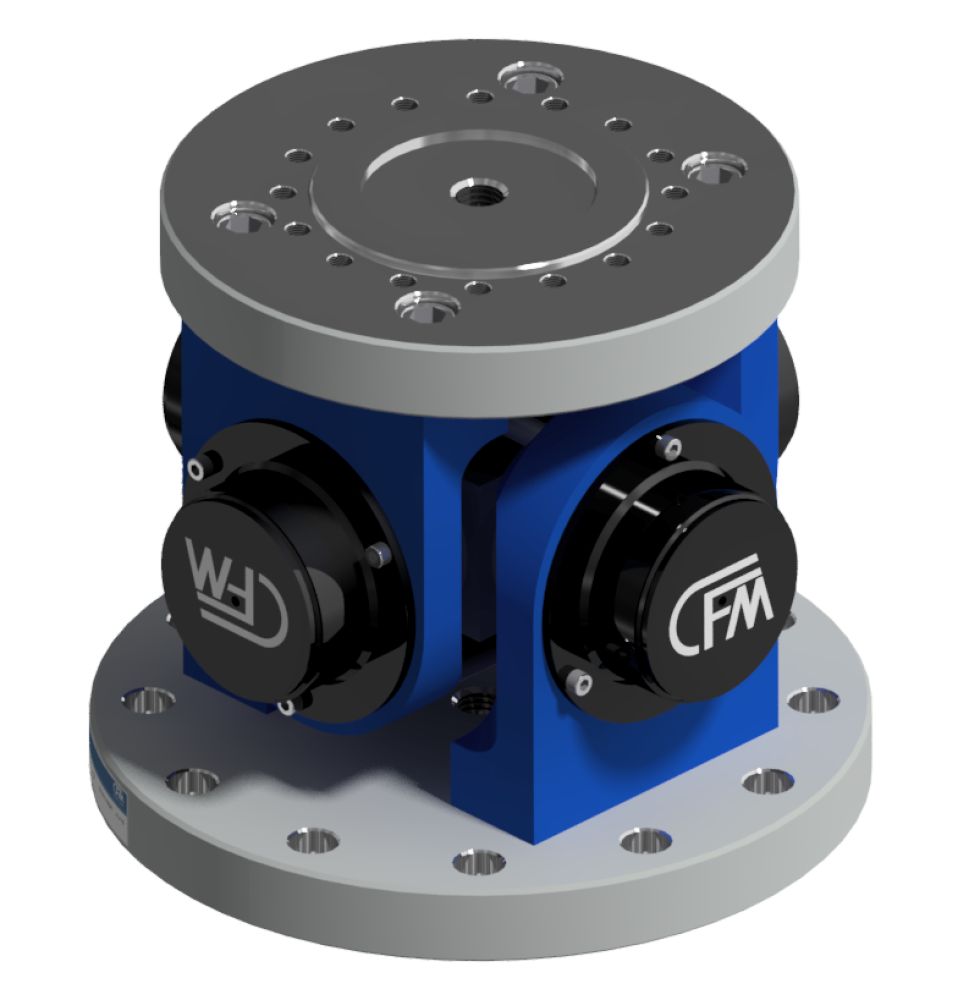
| Naming | Type | Force [kN] | Alpha Angle [α] | Beta Angle [β] | Weight [kg] | Indent-No. |
| CFM CJ 125 | STD | 125 | ± 15° | ± 15° | 30 | 261110 |
| CFM CJ 125 | KMD | 125 | ± 15° | ± 15° | 30 | 261110 |
| CFM CJ 250 | STD | 250 | ± 15° | ± 15° | 85 | 261111 |
| CFM CJ 250 | KMD | 250 | ± 15° | ± 15° | 85 | 261111 |
| CFM CJ 500 | STD | 500 | ± 15° | ± 15° | 430 | 261112 |
| CFM CJ 500 | KMD | 500 | ± 15° | ± 15° | 340 | 261112 |
| CFM CJ 750 | STD | 750 | ± 15° | ± 15° | 575 | 261113 |
| CFM CJ 750 | KMD | 750 | - | - | - | - |
| CFM CJ 1000 | STD | 1000 | ± 15° | ± 15° | 880 | 261114 |
| CFM CJ 1000 | KMD | 1000 | - | - | - | - |
| CFM CJ 2250 | STD | 2250 | ± 5° | ± 5° | 870 | 221646C |
| CFM CJ 2250 | KMD | 2250 | - | - | - | - |
Ball joints
Ball Joints are necessary
- when points of application of force on the test specimen move on a plane or spatial (3-dimensional) path.
- when misalignments in the test setup cannot be avoided.
- in order to protect testing actuators against occurring transverse forces and bending moments.
The support shells are designed and assembled in such a way that the ball stud can be moved with zero-backlash and very little friction. Ball joints are therefore well suited for testing applications with tensile and compressive pulsating loading as well as reversed loading.
Design and function of the CFM Ball Joint with central thread
The ball joint comprises two coaxially assembled, coated support shells with an internal ball stud. The ball stud is composed of a sphere and a pin. It can swivel in all directions from the center position by an angle between 15° and 25° - depending on the type of ball joint. Adapter elements to the pin of the ball stud can be added for a coupling bar, the piston rod, or the actuator base at customer’s choice.
CFM Ball Joints are designed as low-maintenance components. Minimization of backlash between the ball stud and the support shells is realized by means of a central fine pitch thread. Occasional readjustment can be carried out easily. Zero-backlash has to be checked in regular intervals as stipulated in the operating manual.